 (314) 222-2486



Trusted hit and run accident lawyers with over 10 years of experience.
If you have been struck by a driver who fled the scene in St. Louis, the recovery framework looks different from a standard motor vehicle case. The at-fault driver is often unidentified at the time of the claim, which means the primary recovery source is typically your own uninsured motorist coverage. Missouri requires every auto policy issued in the state to include uninsured motorist protection, and that coverage is the foundation of most hit and run claims.
Schmittgens Injury Law Firm represents people injured in hit and run crashes across St. Louis. Our founder Rob Schmittgens has handled hit and run injury claims for ten years. Talk to a St. Louis, MO hit and run accident lawyer clients can rely on. Schedule a free consultation today.
Hit and Run Accident Lawyer St. Louis, MO
Hit and run cases require attention to two issues that do not arise to the same degree in standard motor vehicle claims. The first is identification of the fleeing driver. Police investigation, surveillance footage, witness statements, and physical evidence at the scene can sometimes lead to the at-fault driver, which opens the at-fault carrier’s policy as a recovery source.
The second is the structure of the uninsured motorist claim against the injured party’s own carrier. Missouri requires UM coverage on every policy, but the carrier still investigates and contests these claims, and the procedural rules for UM disputes differ from third-party liability claims in ways that affect both timing and strategy.
Types of Hit and Run Accident Cases We Handle in St. Louis
Hit and run injury claims fall into recognizable patterns based on whether the at-fault driver is later identified, the injured party’s role at the time of the crash, and the available coverage. The case types below reflect the matters we encounter most often in the St. Louis area.
- Identified fleeing drivers. When police, surveillance footage, or witness identification leads to the at-fault driver, the recovery shifts to the driver’s liability carrier and any available umbrella coverage.
- Unidentified driver claims. When the at-fault driver remains unknown, the injured party’s own uninsured motorist coverage becomes the primary recovery source. Missouri policy language varies on what proof is required.
- Phantom vehicle cases. When a driver is forced off the road by an unknown vehicle without physical contact, recovery may still be available under Missouri UM coverage, though some policies impose stricter proof requirements for non-contact incidents.
- Pedestrian hit and run crashes. Pedestrians struck by a fleeing driver may recover under their own auto policy’s UM coverage, even though they were not in a vehicle at the time.
- Cyclist hit and run crashes. Cyclists struck by a fleeing driver have access to their own auto policy’s UM coverage, with proof requirements similar to pedestrian cases.
- Underinsured fleeing driver cases. When the at-fault driver is identified but carries minimum or insufficient liability limits, underinsured motorist coverage on the injured party’s policy supplements the recovery.
- Multi-vehicle hit and run cases. When the fleeing driver caused a chain reaction involving other vehicles, liability and coverage analysis extends to each driver in the sequence.
- Parking lot hit and run cases. Vehicles struck while parked, often in commercial lots, can produce both property damage and injury claims when the driver was inside the vehicle at the time of the strike.
- DUI hit and run crashes. When the fleeing driver was impaired, evidence developed through the criminal investigation often supports punitive damages in the civil case.
- Fatal hit and run cases. We handle wrongful death actions brought by surviving family members under Missouri law when a hit and run results in fatal injuries.
Why Choose Schmittgens Injury Law Firm for Hit and Run Cases in St. Louis, MO?
Plaintiff-Side Hit and Run Experience
Founder Rob Schmittgens has spent ten years representing plaintiffs in motor vehicle injury matters, including hit and run claims pursued through both at-fault carriers and uninsured motorist coverage. He earned admission to the Missouri Bar in 2016 and the Illinois Bar in 2017, with practice rights in the Eastern District of Missouri. Before founding Schmittgens Injury Law Firm, Rob handled personal injury and workers’ compensation claims at several area firms, working cases from intake through final resolution. When we serve as a client’s personal injury lawyer in St. Louis, our experience across the broader injury practice informs our approach to coverage analysis, evidence preservation, and negotiation strategy in hit and run cases.
Rob graduated with honors from Quincy University in 2013 and earned his J.D. from the UMKC School of Law. He maintains active memberships in the Missouri Association of Trial Attorneys, the Illinois Trial Lawyers Association, and the Bar Association of Metropolitan St. Louis (BAMSL).
Contingency Fee Representation
Hit and run injury matters at our firm are handled on a contingency fee basis. We do not require retainers or hourly billing, and we advance the costs of investigation, surveillance footage requests, deposition transcripts, and court fees on behalf of our clients. Our firm has secured millions of dollars recovered for clients across the cases we have handled. If we do not produce a recovery, no fees are owed for our time.
Understanding Hit and Run Accident Cases
Damages, Liability, and Compensation for Hit and Run Accident Cases
Damages in hit and run cases follow standard Missouri personal injury categories, though the available coverage may be limited by the at-fault driver’s identification status and the injured party’s own UM policy limits. Recovery may include economic and non-economic losses, plus property damage in cases where the injured party’s vehicle or other property was damaged.
Common categories of hit and run accident recovery include:
- Medical expenses, including emergency care, surgery, rehabilitation, and future treatment
- Lost wages and reduced future earning capacity
- Property damage to vehicles and personal belongings
- Pain and suffering, inconvenience, and emotional distress
- Long-term care costs in cases involving permanent injury
- Loss of consortium for spouses
- Punitive damages where the at-fault driver was impaired or engaged in other aggravated conduct
Liability in hit and run cases turns on negligence, and Missouri applies pure comparative fault to allocate responsibility. A claimant found 25 percent at fault still recovers 75 percent of established damages. The procedural posture differs from a standard auto case because UM claims pit the injured party against their own insurance carrier, which adopts a defense posture similar to a third-party carrier despite the contractual relationship with the insured.
Important Aspects in Your Hit and Run Accident Case
Several practical realities affect hit and run injury claims. Recognizing them at the outset helps preserve evidence and protect the value of the case.
- The police report should be filed promptly, as some UM policies require a report within a specified window
- Surveillance footage from nearby businesses and residences should be requested before it is overwritten
- Witness statements and license plate information collected at the scene can support driver identification
- Insurance adjusters handling UM claims often investigate aggressively despite the carrier’s relationship with the insured
- Phantom vehicle and non-contact UM claims may require corroborating evidence beyond the insured’s testimony
- Missouri’s five-year statute of limitations governs filing deadlines for personal injury claims, including hit and run cases
The window for identifying a fleeing driver and preserving scene evidence is short. Surveillance recordings are typically retained for only a few weeks, and witness recollection fades over time.
Hit and Run Accident Case Timeline
Hit and run injury claims generally follow a predictable case timeline, though duration varies with whether the at-fault driver is identified and the responsiveness of the carrier handling the claim.
- Initial consultation, police report review, and evidence preservation
- Investigation aimed at identifying the fleeing driver, including surveillance and witness work
- Active medical treatment until maximum medical improvement is reached
- Records and bills collected, demand letter prepared and submitted to the applicable carrier
- Negotiation with the at-fault carrier or the UM carrier, generally 30 to 90 days
- Filing suit if negotiations stall or coverage is contested
- Discovery, depositions, and mediation, followed by trial or settlement
Resolution timelines vary substantially. Cases involving disputed UM coverage, phantom vehicle claims, or multiple defendants often take longer than a year to conclude. Settlement before treatment is fully complete frequently results in a recovery below the case’s actual value because future care needs remain undocumented.
What to Bring to Your Hit and Run Accident Consultation
The following materials, when available, allow for more efficient case evaluation at your initial consultation.
- The police report or its incident number for ordering a copy
- Photographs of the vehicles, the scene, and any visible injuries
- Any partial license plate, vehicle description, or driver description recorded at the scene
- Insurance information for your own auto policy, including your declarations page showing UM and UIM limits
- Medical records and bills you have received
- The names and contact information of any witnesses
Documents not available at the time of the meeting can be requested on your behalf after we are retained. Initial consultations are at no cost and typically run for approximately one hour. You will leave with a candid assessment of the claim, including its strengths, the likely defenses, and a realistic range for the case’s value.
Missouri Legal Resources for Hit and Run Accidents
Missouri’s hit and run framework involves both criminal statutes governing driver duties at a crash scene and civil insurance laws governing uninsured motorist coverage. The resources below are commonly referenced in hit and run cases.
- Missouri’s leaving the scene of an accident statute imposes criminal penalties on drivers who fail to stop and provide identifying information after a crash involving injury, death, or property damage.
- The Missouri financial responsibility law requires every auto policy in the state to include uninsured motorist coverage, which is the recovery source in most hit and run cases involving an unidentified driver.
- The Missouri State Highway Patrol maintains crash records used in hit and run cases occurring on state roads, highways, and interstates.
- The Missouri Department of Revenue administers driver licensing and vehicle registration, which supports identification efforts when partial vehicle information is available.
- National crash data published by the NHTSA tracks fatality and injury trends across crash types, including hit and run incidents.
These resources reflect general rules and available data. The value of any individual case depends on the specific facts of the crash, whether the at-fault driver is identified, the available coverage, and the carrier involved.
Reach Out to Schmittgens Injury Law Firm to Schedule a Consultation
If you have been injured in a hit and run crash in St. Louis, contact Schmittgens Injury Law Firm before providing a recorded statement to your own carrier or any identified driver’s insurer. We will examine the police report, review your insurance coverage, investigate available evidence, and provide an honest assessment of whether you have a case worth pursuing. Initial consultations are provided at no cost, and our representation is on a contingency basis.
Hit and Run Accident Statistics in St. Louis, MO
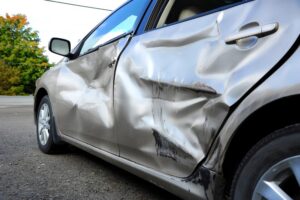 A hit and run leaves an injured person without the information a standard crash provides: no driver at the scene, no insurance details, and often no full account of what happened. These crashes are common. The AAA Foundation for Traffic Safety found that more than 919,000 police-reported crashes in 2023 involved a driver who fled the scene, resulting in roughly 242,000 injuries and 2,872 deaths.
The same research found that 15 percent of all police-reported crashes in 2023 involved a driver who left, and that nearly 80 percent of hit and run fatalities occurred in the dark. Pedestrians and cyclists make up a large share of those killed. Many of these crashes in St. Louis, MO happen on city streets at night, and recovery usually depends on the injured person’s own insurance coverage rather than the fleeing driver’s.
What to Do After a Hit and Run in St. Louis
A fleeing driver removes the most direct evidence from the scene. The steps you take in the first hours and days determine what a hit and run accident attorney has to work with later.
- Call the police and wait at the scene. A hit and run is a criminal matter, and the officer’s report is the basis for any claim that follows. Wait for police if it is safe to do so, and give them the details while your memory is current.
- Record what you saw. A partial plate, the vehicle’s color or make, visible damage, or the direction the driver went can each help identify the driver later. Note these details before they fade.
- Check for nearby cameras. Gas stations, businesses, and homes often record the street, and that footage is frequently erased within a week or two. Note which locations face the scene so the recordings can be requested in time. This is the evidence that most often identifies an unknown driver.
- Identify any witnesses. A person who saw the vehicle or part of the plate can support your claim. Collect names and phone numbers before people leave.
- See a doctor the same day. Injuries are not always obvious immediately, and a delay in treatment gives your insurer room to question whether the crash caused them. Prompt care connects the two and begins the record that supports your damages.
- Notify your own insurer, but keep it brief. When the other driver is gone, your uninsured motorist coverage is usually the source of recovery, so the claim runs through your own company. Report the crash, but wait to give a detailed recorded statement until you have spoken with a lawyer.
St. Louis Hit and Run Accident Lawyer FAQs
The driver left. How do I recover anything?
Through your own uninsured motorist coverage, which Missouri requires on every auto policy. When the at-fault driver is never identified, that coverage applies in their place and pays for your injuries. It is the reason a hit and run claim is still worth pursuing when there is no one to name.
Will my rates increase for using my coverage?
You bought uninsured motorist coverage for this situation, and using it after another driver flees is not the same as being at fault for a crash. Rate practices vary by insurer, but concern over a possible premium change is rarely a sound reason to forgo a legitimate injury claim.
What happens if the police find the driver?
The claim can then shift to that driver’s liability insurance, with your own coverage available behind it if their limits are too low. Identification often comes from a partial plate, a camera, or a witness, which is why acting on those leads early matters.
What is a phantom vehicle claim?
It is a hit and run in which no vehicle made contact with you, such as a driver who forces you off the road and continues on. These claims may still be covered under uninsured motorist coverage, though insurers usually require more proof when there was no contact, so independent witnesses help.
How long do I have to bring a claim?
Missouri allows most injury claimants five years under section 516.120. Your own policy, however, may require notice to the company much sooner, and the leads that identify a fleeing driver disappear within weeks. Delay works against you on both counts.
Why is my own insurance company opposing my claim?
Although you pay the premiums, an uninsured motorist claim places your insurer in the position of the party that pays, and it investigates the claim like any other. An early, cooperative call can turn into a low offer. A car accident lawyer in the process changes that.
Should I give my insurer a recorded statement?
Not before you understand the claim. Adjusters often request one within a day or two, while you are still in pain and unsure of the facts, and an early answer can later be used to reduce what you recover. You may decline and speak with a lawyer first.
What injuries do these crashes usually involve?
The same injuries as any high-impact collision, since fleeing drivers are often speeding or impaired. Fractures, spinal injuries, and brain injuries are common. Pedestrians and cyclists struck by a fleeing driver are frequently hurt most severely, with no vehicle to protect them.
Does it matter that the driver broke the law by leaving?
It can. A driver who fled, particularly one who was impaired or unlicensed, may have acted in a way that supports additional damages once the criminal investigation develops the facts. Whether that applies depends on what the investigation reveals about the driver.
Do hit and run cases settle or go to trial?
Most settle once your treatment stabilizes and the coverage is established. A case is more likely to proceed toward court when your insurer disputes the proof in a phantom vehicle claim or undervalues a serious injury, and many of those still resolve before trial.
What is my hit and run case worth?
It depends on the severity of your injuries, the treatment ahead, your lost income, and the coverage available on your policy. Any figure offered on the first call is an estimate. A realistic range follows once the medical records and your policy limits are known.
What does a hit and run lawyer cost up front?
Nothing. The first meeting is free, and these cases are handled on a contingency fee, so the fee comes from the recovery and there is none if there is no recovery. You should not have to pay hourly to make your own insurer honor coverage you already purchased.
Local Information for St. Louis Hit and Run Accident Cases
In St. Louis, a hit and run usually involves a police report, a search for nearby camera footage, and a claim against your own coverage, so the contacts below are often the first ones needed.
Important Local Resources for St. Louis Hit and Run Accident Cases
Reporting the crash and obtaining treatment are immediate priorities. The contacts below assist with both and are provided for informational purposes only, without endorsement.
- St. Louis Metropolitan Police Department, to report a hit and run: (314) 231-1212
- Missouri State Highway Patrol, for reports on highways: (573) 526-6113
- City of St. Louis Citizens’ Service Bureau, for street camera and signal questions: (314) 622-4800
- Barnes-Jewish Hospital, regional trauma care: (314) 747-3000
About Schmittgens Injury Law Firm
Schmittgens Injury Law Firm represents injured people, and in a hit and run that often means working against the client’s own insurance company. Rob Schmittgens founded the firm so that the person hurt in the crash deals directly with the lawyer handling the claim rather than a rotating cast of staff. Recovery in these cases depends on identifying a fleeing driver and holding an insurer to coverage the client already paid for.
What Our Clients Say
★★★★★
“I was rear-ended by someone who took off, and I figured I was out of luck. Rob walked me through my own policy, found the coverage I did not know I had, and dealt with the insurance company so I did not have to. He was straight with me the whole way and got me more than I expected. I recommend him without reservation.” — Curtis Wiegand
Read more reviews on our Google Business Profile.
Contact Schmittgens Injury Law Firm
The hardest part of a hit and run is the feeling that there is no one to pursue. Often there is, in the form of coverage on your own policy that you may not know is there. Rob Schmittgens reads through your insurance, looks for the leads that could still identify the driver, and gives you a clear read on what recovery is realistic. There is no charge to talk it through, and no fee unless the firm recovers for you. Speak with Rob about what your policy may cover.